Award winners / 2020 / Concept category
LAVOSBALL
LAVOSBALL
- Alkotók|Designers
- SZABOLCS János
- Fotó|Photography
- BÉZSENYI Zsolt, JÓNÁS Jácint, MOHAI Balázs
Description
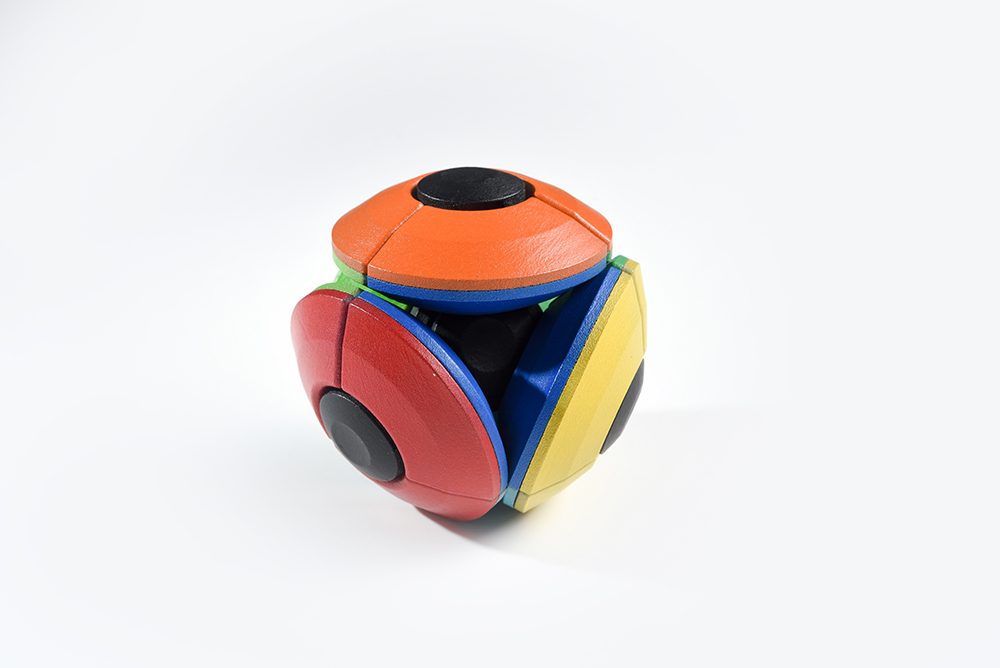
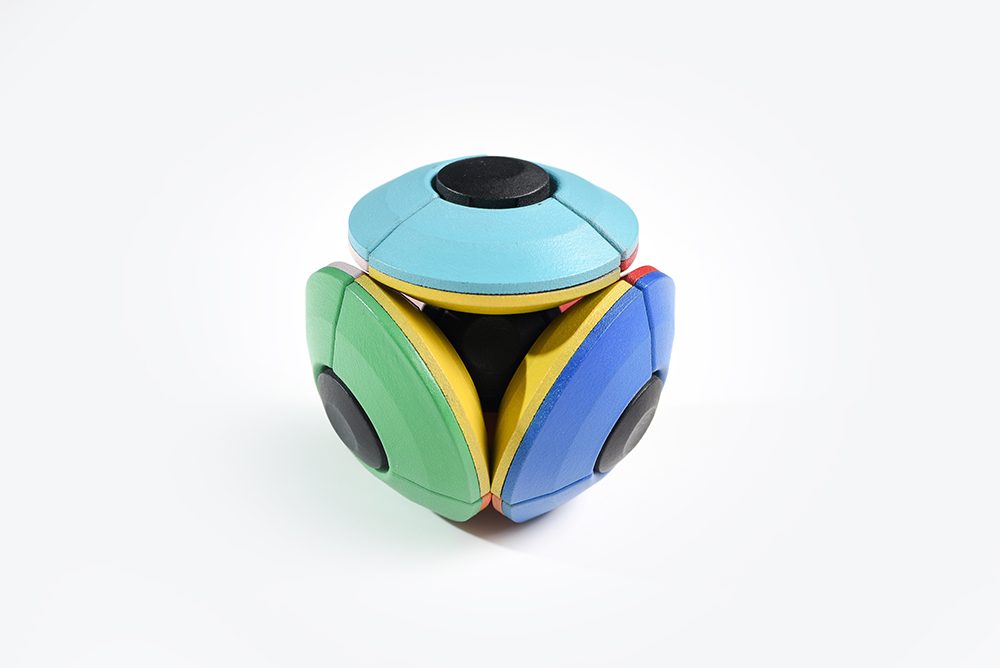
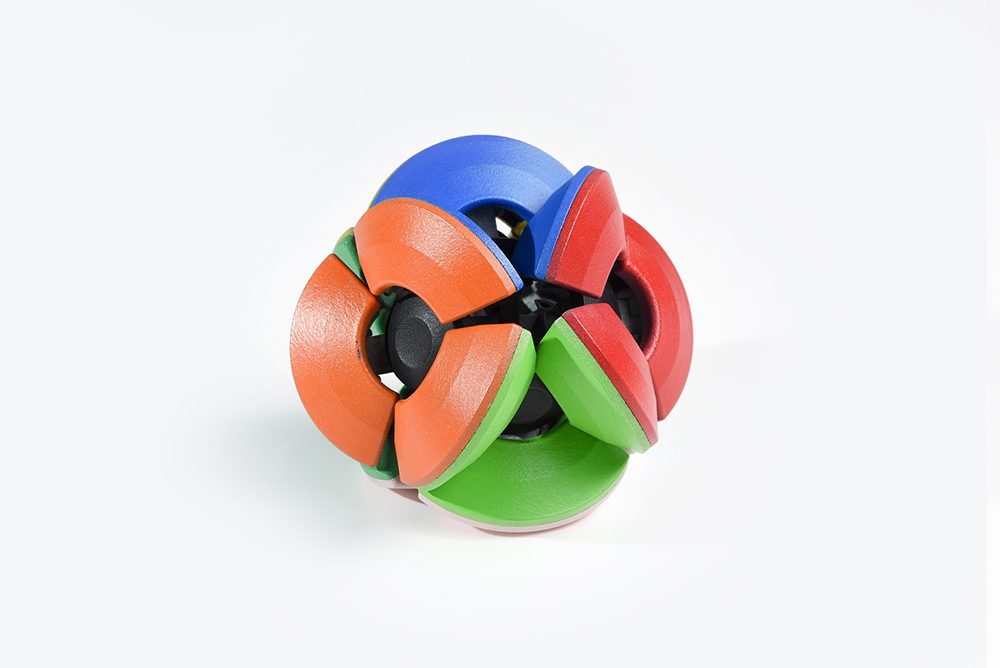
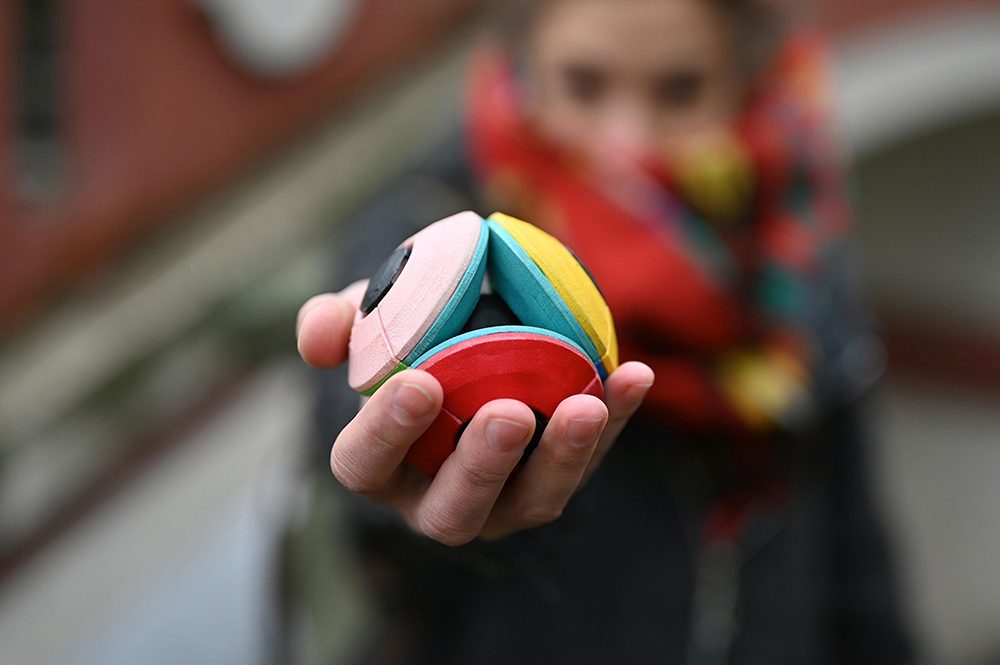
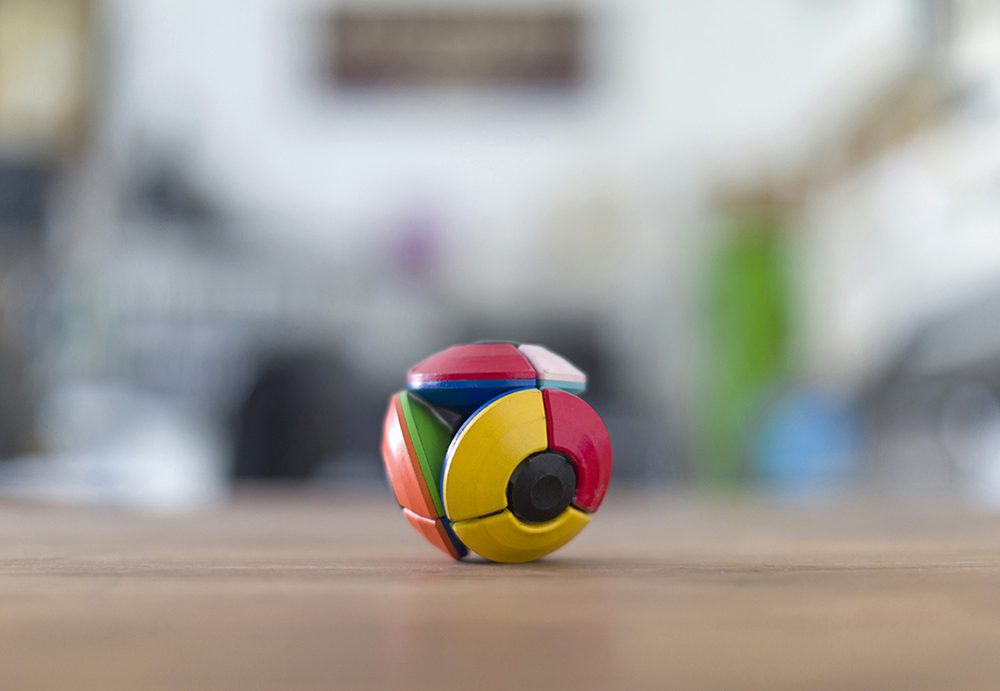
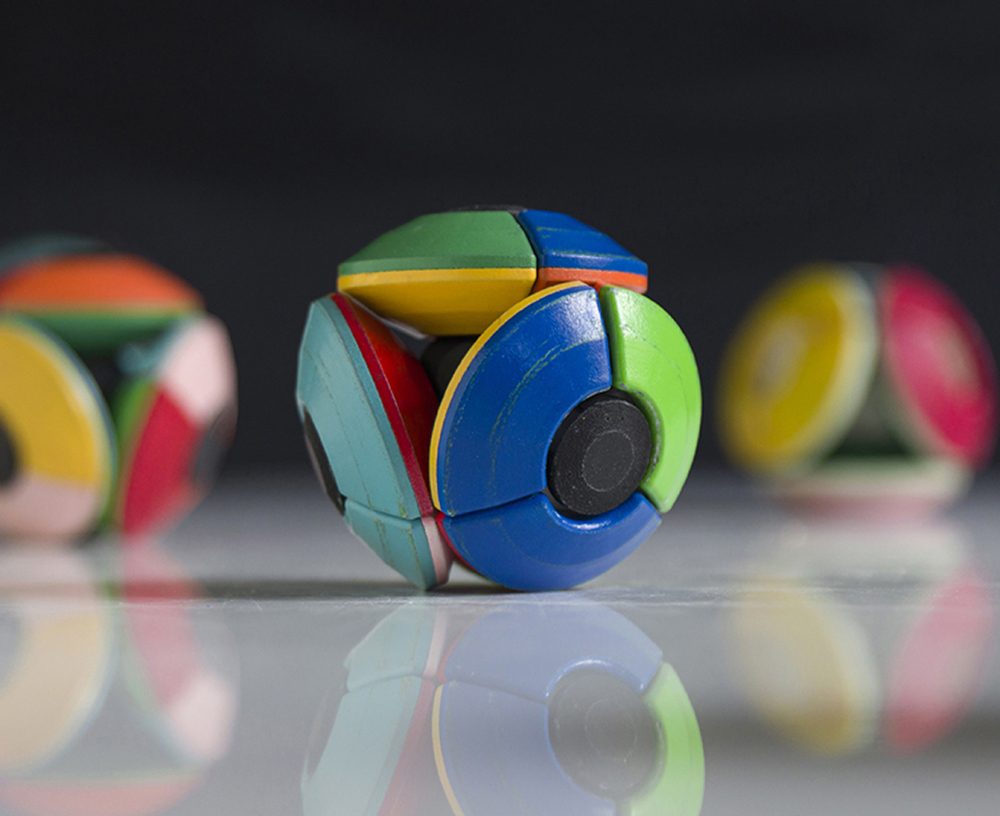
As the designer of LavosBall deals with interior and visual design too, interpreting spatial relations forms an integral part of his day-to-day activity. This puzzle game called LavosBall took more than three and a half years to develop and is aimed at developing spatial vision and spatial thinking. It is related to Rubik’s Cube in several ways but is not based on Descartes’ coordinate system but on that of Leonardo. Instead of three axes at right angles, it is made up of four reels at 120 degrees with each other. It has four discs, each composed of three elements (spinners) of the same size and form, and their position can be changed separately by twisting. The spinners have warm colours on one side and cold colours on the other, and the objective of the game is to create a configuration of same-colour surfaces. While in Rubik’s Cube all the sides are always visible, when playing with LavosBall the player has to simultaneously focus on the visible and the hidden surfaces. In order to solve the puzzle, the player has to get inside the ball by pressing the centre of the reels, as a result of which the spinners are set in motion.
Statement of the jury
The well thought-through and all-encompassing design makes LavosBall a meaningful form of entertainment for people of all ages. It is a 3D logical puzzle game, where users need to match colours and assemble surfaces of the same colour. Its unique feature is that the four colour discs – which combine into a ball – flip inside-out when the centres of the reels are pressed and thus four new colours During the design process, besides studying Rubik’s cube, the designer also analysed the Hoberman sphere, which is a hexaflexagon with infinite movement, as well as the Epimenides paradox, which demonstrates recursive processes. The combined effect of these can be seen in this puzzle game with an intriguing spatial geometry. Thanks to its stunningly innovative structure, LavosBall not only has discs that can be flipped but it also produces a uniquely dynamic movement when the discs flip around creating the effect of a magician’s trick. This object helps develop logic, spatial vision and colour perception as well as fine manual motor skill. By being immersed in this object and experiencing carefree joy, users are symbolically lifted out from space and time while playing with it.
Designing a logical puzzle game is a huge challenge in the country of Rubik’s cube but we think that the ingenious solutions and attractive appearance of LavosBall make it a worthy successor of the cube invented by Rubik in 1974.